Half of Ottawa sits in a high-risk radon zone. It’s the rock underneath the city.
The map below comes from a 2016 geological study of the National Capital Region. It shows which neighbourhoods have the highest probability of elevated radon based on bedrock, soil, and uranium concentrations.
Find your neighbourhood. See your zone. Understand what it means.
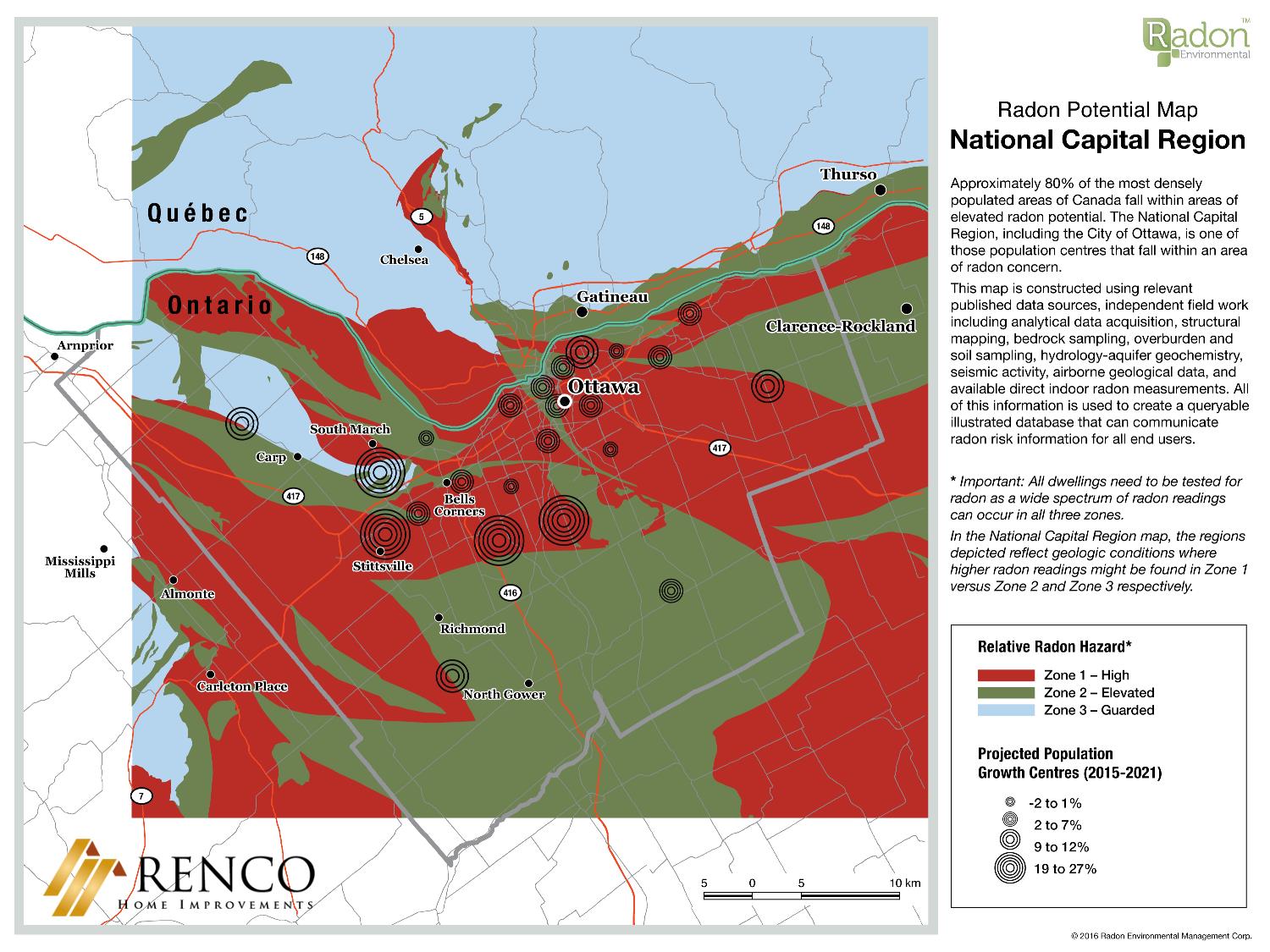
ottawa-renco-radon-map
Image: 2016 geological study of the National Capital Region
How to Read the Map
The map divides Ottawa into three zones based on radon potential.
Zone 1 (Red): High. Geological conditions here are most likely to produce elevated radon indoors.
Zone 2 (Green): Elevated. Moderate potential. Lower than Zone 1, but elevated readings still happen.
Zone 3 (Light grey): Guarded. Lowest probability. But not zero. High readings have been recorded in all three zones.
The map shows probability, not certainty. Two houses on the same street can have completely different radon levels. It depends on the foundation, the cracks, the ventilation, and how the home sits on the ground.
Find Your Neighbourhood
The map above includes radon data on all major areas inside the city of Ottawa. Quick summary of each below:
Kanata and Stittsville
Most of Kanata falls into Zone 2 (Elevated). Some pockets push into Zone 1 along the southern edges near the 417. Stittsville is similar. Elevated potential, not the highest, but enough that testing makes sense.
Orleans and Gloucester
Zone 1 (High). The eastern half of Ottawa sits on geology that produces higher radon concentrations. If you live in Orleans, Blackburn Hamlet, or Gloucester, your home is more likely to have radon issues.
Bells Corners
Zone 1 (High). Bells Corners is also one of Ottawa’s fastest-growing areas. That means a lot of newer homeowners who may not know their risk. New builds have radon rough-ins under Tarion, but a rough-in is just a pipe. It does nothing until a fan is installed.
Barrhaven
Mixed. Northern Barrhaven sits in Zone 2. Southern sections closer to Richmond push into Zone 1. If you’re not sure where your home falls, test.
Centretown, The Glebe, and Old Ottawa South
Zone 1 (High). The urban core sits on high-potential geology. Older homes add another layer of risk. More cracks, more settling, more ways for radon to get in.
Nepean
Mostly Zone 1 (High). Large portions of Nepean, including the areas around Algonquin College and Merivale, fall into the highest risk category.
Richmond and North Gower
Zone 1 (High). Rural southwest Ottawa doesn’t escape the geology. Same rock formations as the downtown core.
Carp and South March
Zone 2 (Elevated) with Zone 1 edges. The western fringe has mixed geology, but most of Carp and South March still shows elevated potential.
Where This Data Comes From
This map was produced by Radon Environmental Management Corp in 2016. It’s based on real data, not estimates.
Their team analyzed bedrock formations across the region. They sampled soil and measured uranium concentrations. They cross-referenced aeroradiometric surveys and pulled from direct indoor radon measurements taken in Ottawa homes.
Ottawa’s risk traces back to specific rock formations: the Billings Formation, the Eastview member of the Lindsay Formation, and parts of the Bobcaygeon Formation. These contain more uranium. Uranium decays into radon. Radon seeps through your foundation.
Why You Still Need to Test
The map tells you what’s likely. Testing tells you what’s actually in your home.
Even if you’re in a low-risk zone, your house might have cracks in the foundation, gaps around the sump pump, or floor drains that let radon through. The only way to know your level is to measure it.
We use a 7-day test because the 2-day kits from hardware stores bounce around too much to trust. Seven days gives you a number you can actually act on. If your results come back high, we run a second test to confirm before recommending anything.
Health Canada says anything above 200 Bq/m³ should be fixed. If you’re over that threshold, we install a sub-slab depressurization system—a fan and vent pipe that pulls radon out from under your foundation and pushes it outside. Most installs take about four hours.
Get Your Home Tested for Radon
You will speak directly with Renco owner Terry Fraser and receive a free assessment on radon risk and mitigation options.